
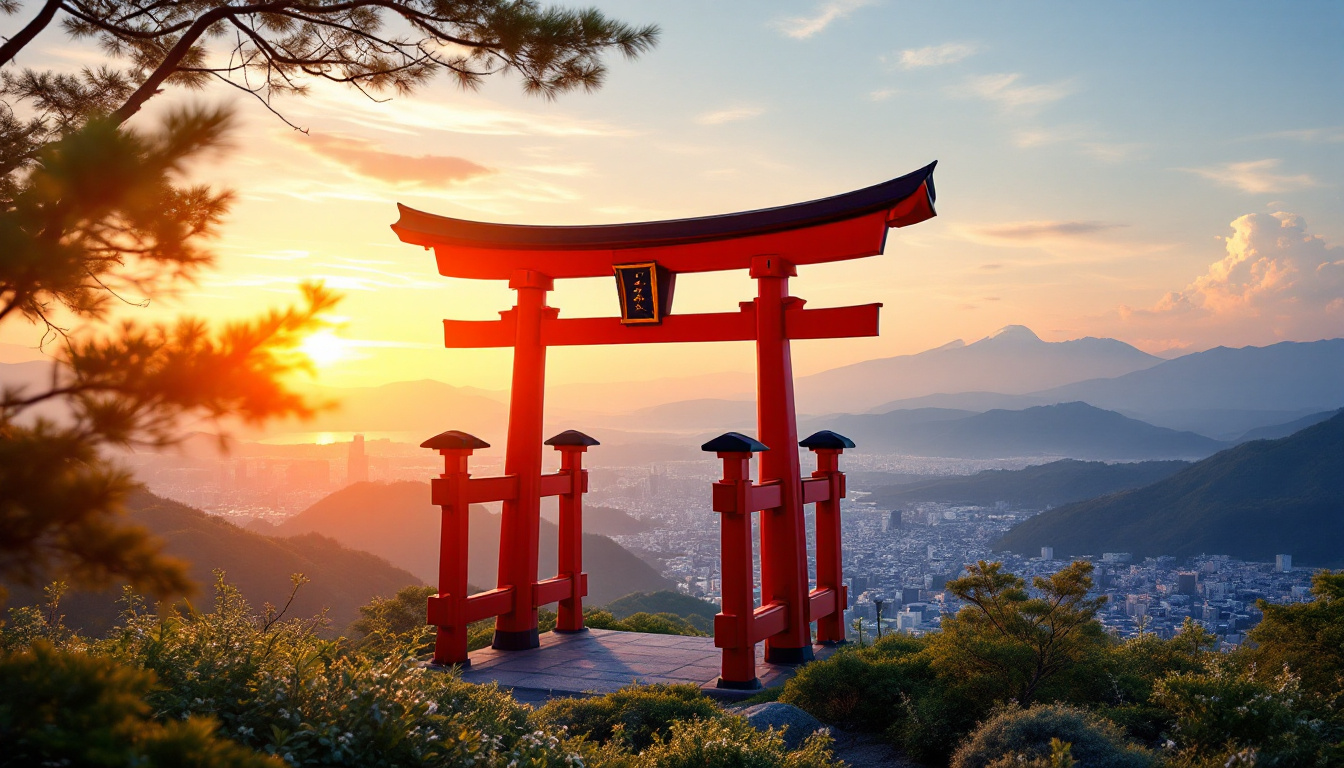
The Torii Gate is an iconic symbol of Japan, often seen at the entrance of Shinto shrines, signifying the transition from the mundane to the sacred. These gates, with their distinctive shape and often vibrant red color, are a common sight throughout the country, from bustling city streets to serene mountain tops.
But what exactly is a Torii Gate? What is its significance? And how does it relate to your travel experience in Japan? This glossary entry will delve into these questions, providing a comprehensive understanding of this fascinating aspect of Japanese culture.
The History of Torii Gates
The origins of Torii Gates are somewhat shrouded in mystery. Some scholars suggest that they may have originated from India, China, or Korea, while others believe that they are uniquely Japanese. Regardless of their origins, Torii Gates have been a part of Japanese culture for centuries, with the oldest existing stone Torii Gate dating back to the 10th century.
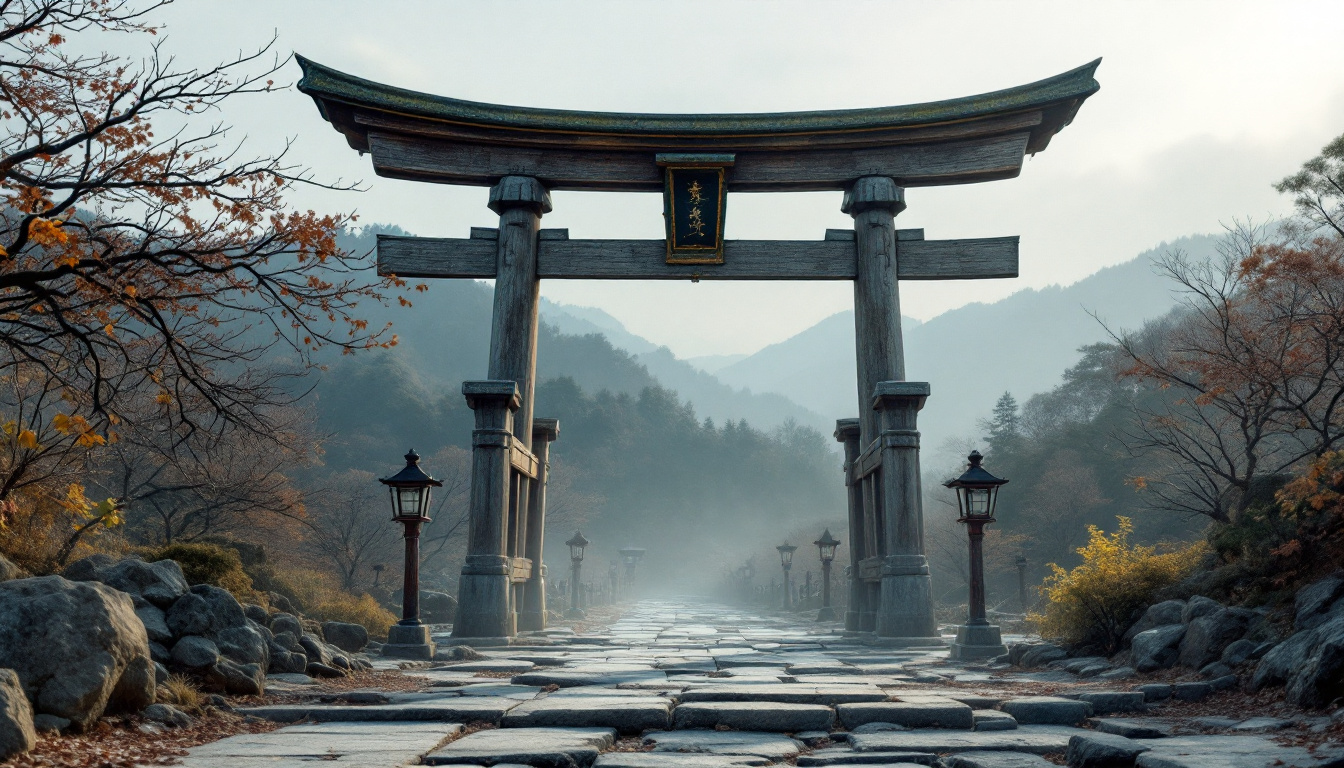
The word “Torii” itself is believed to come from the term “tori-iru”, which means “to pass through and enter”. This reflects the gate’s role as a symbolic entrance to a sacred space. Over time, the design and significance of Torii Gates have evolved, reflecting changes in religious beliefs, artistic styles, and societal values.
Evolution of Torii Gate Designs
While the basic structure of a Torii Gate – two vertical posts supporting a horizontal crosspiece with a curved or straight lintel – has remained relatively consistent, there are many variations in design. These variations often reflect the specific beliefs of the shrine where the gate is located, the region of Japan, and the era in which the gate was built.
For example, the Myojin Torii, characterized by its curved upper lintel, is one of the most common types and is often associated with shrines dedicated to Inari, the Shinto god of rice and agriculture. On the other hand, the Shinmei Torii, with its straight lintels, is typically found at shrines dedicated to Amaterasu, the sun goddess.
Symbolism and Significance
The Torii Gate is more than just an architectural feature; it is deeply symbolic. It marks the boundary between the physical and spiritual worlds, serving as a portal to the divine. When you pass through a Torii Gate, you are entering a space where the kami, or Shinto deities, reside.
Furthermore, the gate’s design elements also carry symbolic meanings. The vertical posts represent the boundary between the human and divine worlds, while the horizontal crosspiece represents the bridge connecting these two worlds. The curved or straight lintel, meanwhile, is often seen as a symbol of the divine presence.
Experiencing Torii Gates While Traveling in Japan
As a traveler in Japan, you will likely encounter Torii Gates frequently, whether you’re exploring urban areas or hiking in the countryside. These gates are not just photogenic landmarks; they offer a window into Japanese culture and spirituality.
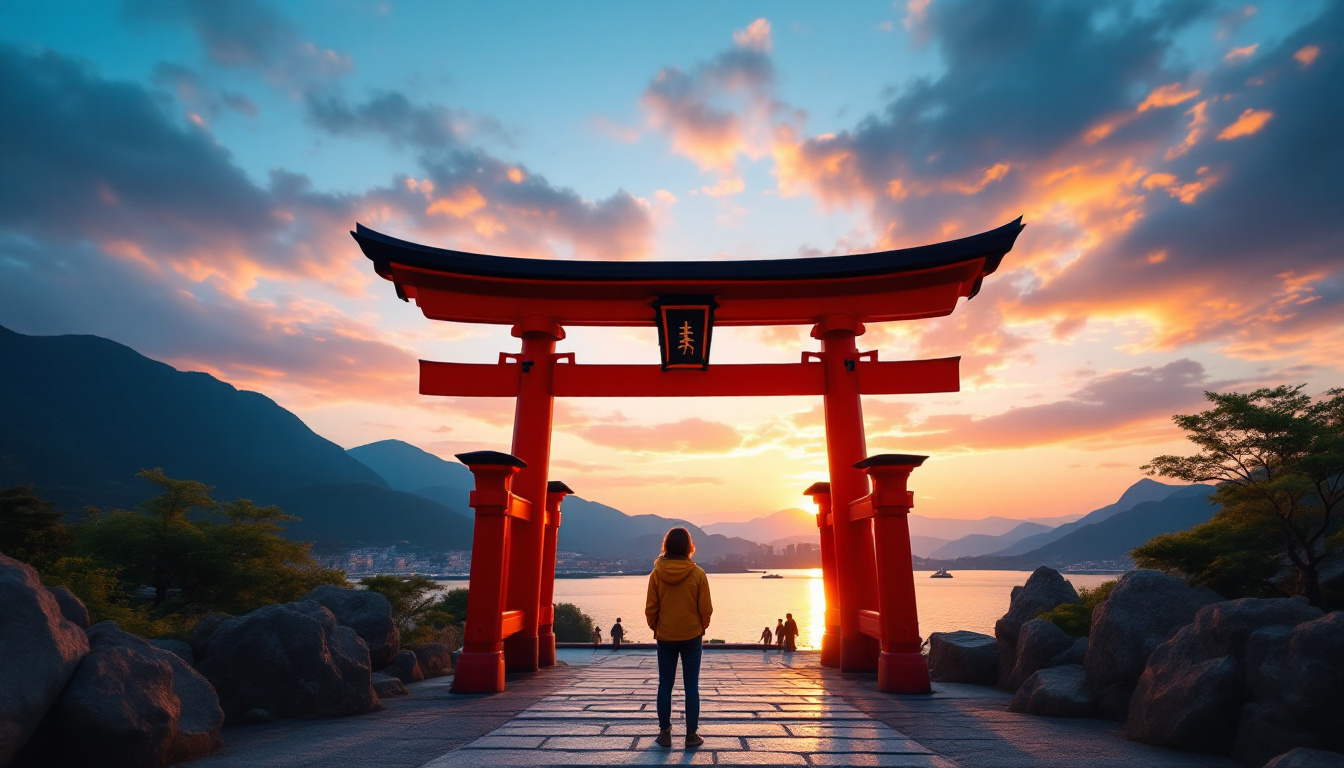
When visiting a shrine with a Torii Gate, it’s important to show respect. This includes walking through the gate properly – it’s customary to walk along the side, not down the center, which is reserved for the kami. Also, a slight bow before entering and exiting the gate is a common practice.
Notable Torii Gates to Visit
There are many notable Torii Gates throughout Japan, each with its own unique charm. The Fushimi Inari Shrine in Kyoto, famous for its thousands of vermilion Torii Gates, is a must-visit. The gates, donated by businesses and individuals seeking good fortune, create a mesmerizing tunnel leading up to the shrine.
Another iconic Torii Gate is the floating gate at Itsukushima Shrine in Hiroshima. At high tide, the gate appears to float on the water, creating a stunning visual effect. This gate is considered one of the three most scenic views in Japan.
Photographing Torii Gates
Given their visual appeal, Torii Gates are a favorite subject for photographers. When photographing these gates, consider the composition and lighting to capture their beauty and symbolism. For example, shooting from a low angle can emphasize the gate’s height and grandeur, while shooting at sunrise or sunset can create a dramatic backdrop.
Remember, however, that these are sacred sites. Always be respectful and avoid obstructing others when taking photos. Also, some shrines may have restrictions on photography, so be sure to check any signage or ask if in doubt.
Conclusion
In conclusion, the Torii Gate is a significant aspect of Japanese culture, embodying centuries of history, religious beliefs, and artistic expression. As a traveler in Japan, understanding the meaning and significance of these gates can enrich your experience, providing deeper insights into the country’s unique cultural landscape.

So, the next time you pass through a Torii Gate, take a moment to appreciate not just its aesthetic appeal, but also the spiritual journey it represents. After all, travel is not just about seeing new places, but also about gaining new perspectives.
Ready to embark on a spiritual and cultural journey through Japan’s majestic Torii Gates? Let Travel2Borders craft the perfect itinerary for you. With our expertise in custom travel planning, we’ll handle all the bookings and reservations, ensuring you get the best rates on hotels and flights. All you need to do is pack your bags and board the plane. Book your next trip with us and experience the seamless blend of tradition and convenience.