
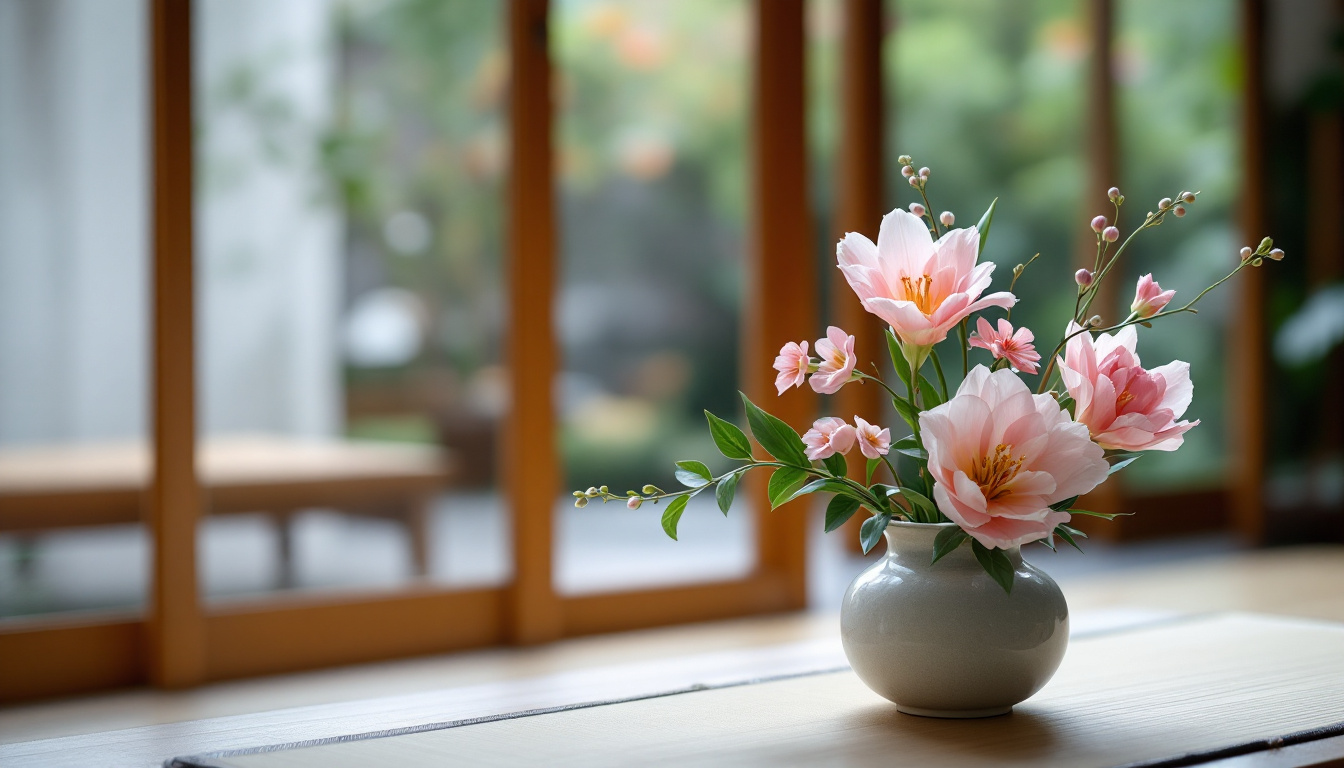
Welcome to the comprehensive guide on Ikebana, a traditional Japanese art form that involves the creation of beautiful, balanced flower arrangements. This art form is deeply rooted in Japanese culture and is often a must-see for travelers exploring Japan. In this glossary entry, we’ll delve into the intricacies of Ikebana, its history, significance, types, and how you can experience it during your travels in Japan.
Ikebana is more than just arranging flowers in a vase. It’s a disciplined art form where nature and humanity are brought together. It’s steeped in the philosophy of developing a closeness with nature and creating a balance between the artist, the flowers, and the setting. Let’s embark on this journey to understand Ikebana better.
History of Ikebana
The history of Ikebana dates back to the 6th century when Buddhism was introduced to Japan from China and Korea. The practice of offering flowers on the altar in honor of Buddha was part of this introduction. These offerings were initially quite simple, but over time, they evolved into more elaborate arrangements, leading to the birth of Ikebana.
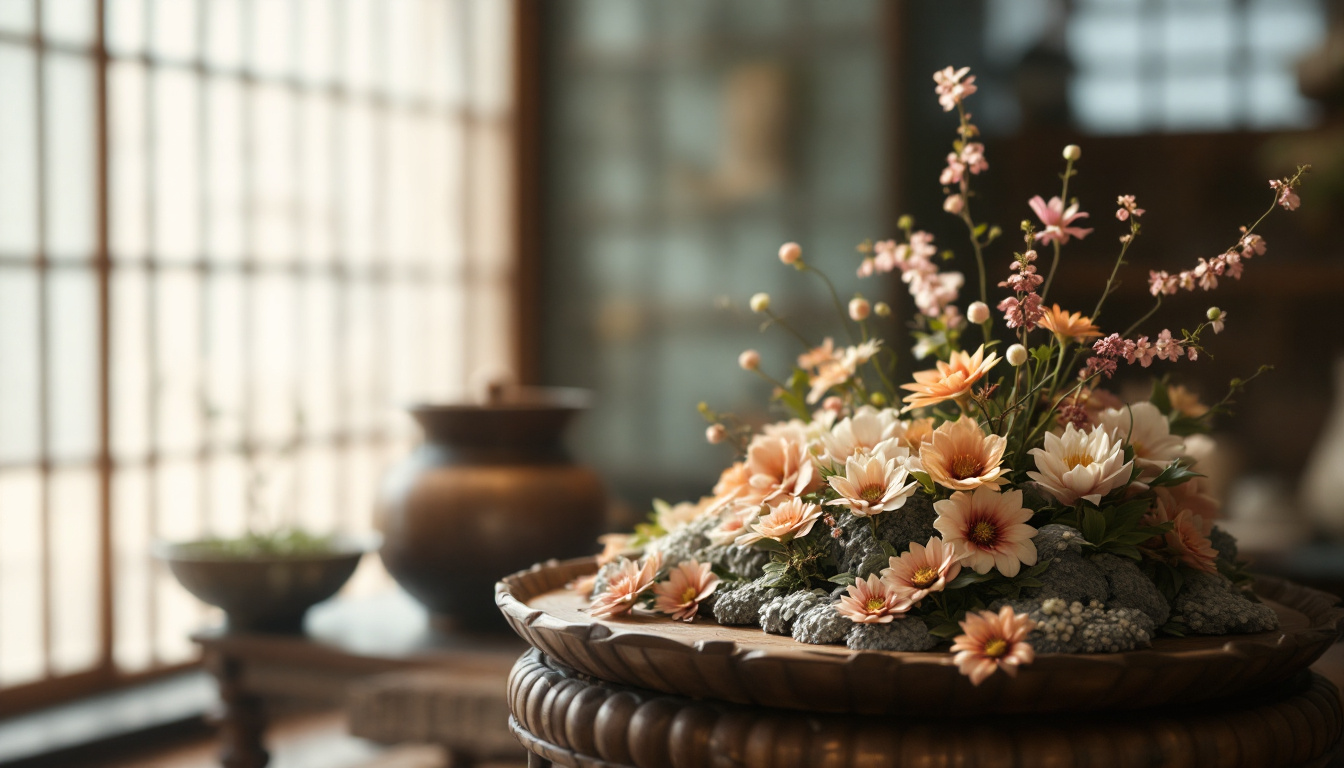
By the 15th century, Ikebana had developed into a distinct art form with its own set of rules. The first school of Ikebana, Ikenobo, started during this period. The art form continued to evolve over the centuries, with different styles and schools emerging, each with its unique aesthetic and philosophy.
The Influence of Buddhism
Buddhism played a significant role in the development of Ikebana. The Buddhist appreciation for nature and the concept of impermanence heavily influenced the art form. In Ikebana, the beauty of each flower is highlighted, including those that are often overlooked in other contexts. This reflects the Buddhist belief in the inherent value of all living things.
Moreover, the ephemeral nature of flower arrangements symbolizes the Buddhist concept of impermanence. Just as flowers bloom and wilt, everything in life is transient and constantly changing. This philosophy is a key element in Ikebana and is often meditated upon while creating the arrangements.
Understanding Ikebana
At its core, Ikebana is about more than just aesthetics. It’s a thoughtful process that requires patience, precision, and a deep understanding of plants and their life cycles. Unlike Western flower arranging, which emphasizes color and abundance, Ikebana values space, asymmetry, and simplicity.
Each element in an Ikebana arrangement has a meaning. The main branches, known as ‘Shin’, ‘Soe’, and ‘Hikae’, represent heaven, man, and earth respectively. The vase and the flowers together form a total artwork, with each part contributing to the overall harmony.
The Principles of Ikebana
There are several principles that guide the practice of Ikebana. The first is the idea of minimalism. Instead of using a large number of flowers, Ikebana often uses only a few, carefully selected plants to create a balanced composition. This minimalistic approach is in line with the Zen philosophy of simplicity.
Another important principle is the use of empty space. In Ikebana, space is just as important as the flowers themselves. It contributes to the overall composition and creates a sense of balance and harmony. The arrangement is also designed to be viewed from all angles, with each viewpoint offering a different perspective.
Styles and Schools of Ikebana
There are over 1,000 schools of Ikebana, each with its unique style and philosophy. The three most prominent schools are Ikenobo, Ohara, and Sogetsu. Ikenobo is the oldest school and is known for its classic, formal style. Ohara introduced the concept of ‘landscape arrangements’, while Sogetsu is known for its modern, avant-garde approach.
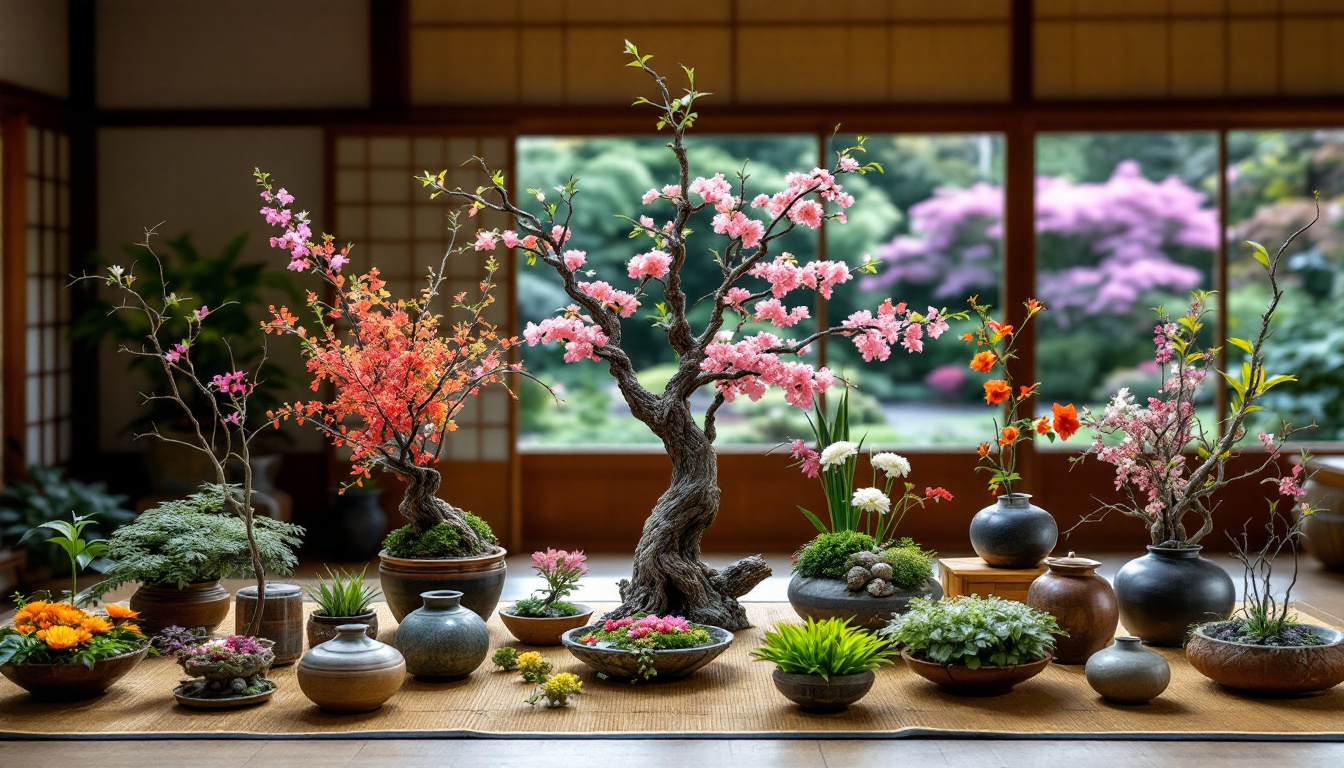
Despite their differences, all schools share the fundamental principles of Ikebana – the love of nature, the importance of balance and harmony, and the thoughtful, meditative process of arranging flowers.
Ikenobo School
The Ikenobo school is the oldest and most traditional school of Ikebana. It dates back to the 15th century and is named after the Rokkakudo Temple in Kyoto, where the founder, Ono no Imoko, served as head priest. The Ikenobo school is known for its formal style, which emphasizes the natural beauty of the flowers and plants used in the arrangement.
The school’s most distinctive style is ‘Rikka’, also known as ‘standing flowers’. Rikka arrangements are complex and formal, often used for ceremonial occasions. They represent a miniature landscape, with each element symbolizing a natural feature such as mountains, valleys, or waterfalls.
Ohara School
The Ohara school was founded in the late 19th century by Unshin Ohara. He developed a new style known as ‘Mori-Ike’, or ‘piled-up style’, in response to the introduction of Western flowers in Japan. This style features a mound of tightly arranged flowers, designed to showcase their vibrant colors.
Ohara is also known for its ‘landscape arrangements’, which depict natural landscapes in a shallow, flat container. These arrangements are designed to be viewed from the front and often feature seasonal scenes.
Sogetsu School
The Sogetsu school is one of the most modern schools of Ikebana. It was founded in 1927 by Sofu Teshigahara, who believed that Ikebana should be a creative expression, free from rigid rules. The Sogetsu school encourages individuality and innovation, allowing the use of unconventional materials and techniques.
Sogetsu arrangements can be anything from a simple composition of a few stems to a large, sculptural installation. The school’s motto is “Sogetsu Ikebana can be created anytime, anywhere, by anyone”.
Experiencing Ikebana in Japan
Traveling in Japan offers numerous opportunities to experience Ikebana. Many temples, museums, and cultural centers across the country hold Ikebana exhibitions, where you can admire the work of both professional and amateur artists. These exhibitions are a great way to see a variety of styles and understand the depth and diversity of this art form.
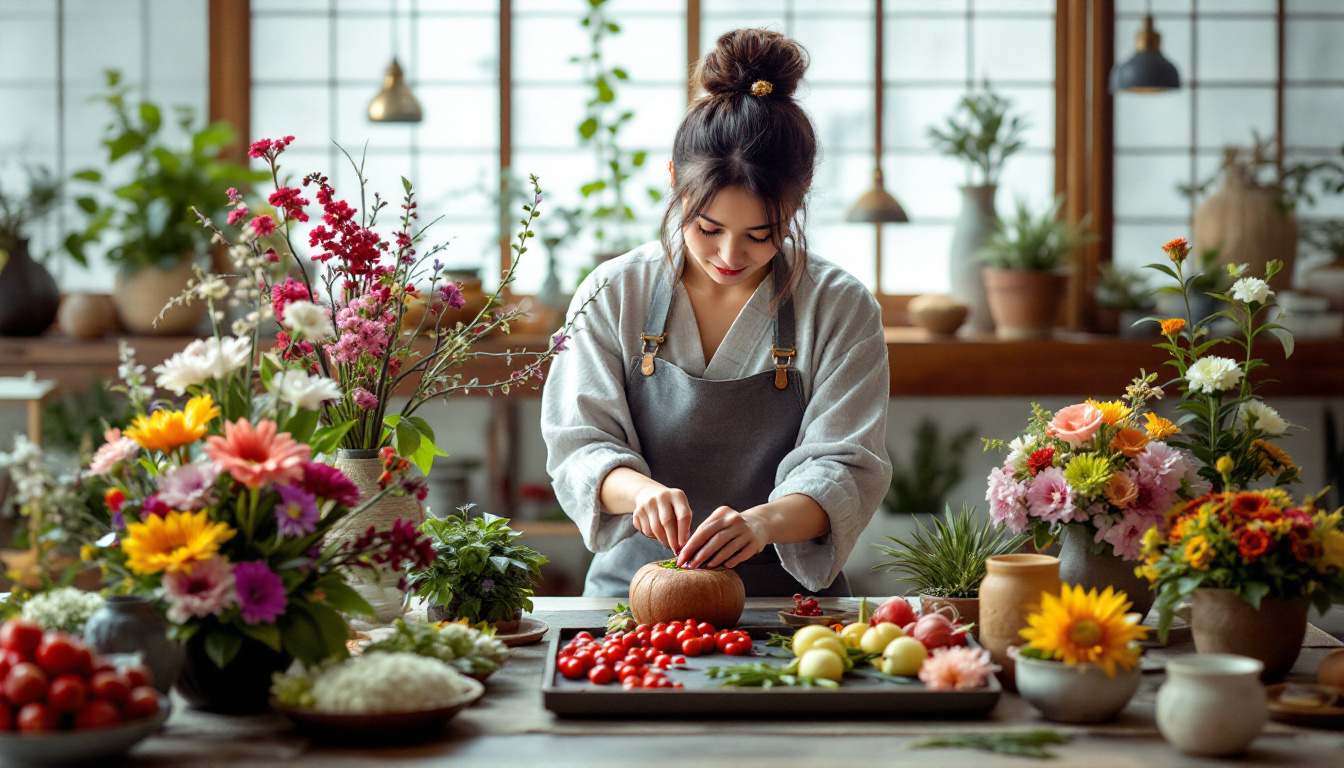
For a more hands-on experience, consider taking an Ikebana class. Many schools offer short courses for beginners, where you can learn the basics of this art form and create your own arrangement. It’s a unique and memorable way to immerse yourself in Japanese culture.
Ikebana Exhibitions
Ikebana exhibitions are held regularly throughout Japan, showcasing the work of both established and emerging artists. These exhibitions offer a unique opportunity to see a wide range of Ikebana styles and techniques. Some of the most prestigious exhibitions are held by the major Ikebana schools and feature the work of their top masters.
One of the most famous Ikebana exhibitions is the annual ‘Ikebana Sogetsu Exhibition’ held at the Sogetsu Hall in Tokyo. This event attracts artists from all over the world and is known for its innovative and avant-garde arrangements.
Ikebana Classes
If you’re interested in trying your hand at Ikebana, taking a class is a great option. Many Ikebana schools offer classes for beginners, where you can learn the basic principles and techniques of this art form. These classes typically include a demonstration by the teacher, followed by a hands-on session where you can create your own arrangement.
Classes are usually small, allowing for personalized instruction. You’ll also have the chance to use traditional Ikebana tools and materials, adding to the authenticity of the experience. At the end of the class, you’ll have a beautiful arrangement to take home, along with a deeper appreciation for this traditional Japanese art form.
Conclusion
Ikebana is a fascinating art form that offers a unique perspective on nature and aesthetics. Its deep roots in Japanese culture and philosophy make it a must-see for anyone traveling in Japan. Whether you choose to visit an exhibition or take a class, experiencing Ikebana is sure to be a highlight of your trip.
Remember, Ikebana is not just about arranging flowers. It’s about appreciating the beauty of nature, finding balance and harmony, and expressing yourself creatively. So, as you explore this art form, take the time to slow down, observe carefully, and immerse yourself in the process. You might just find that Ikebana offers a new way of seeing the world.
Ready to embrace the serene beauty of Ikebana and explore the rich culture of Japan? Let Travel2Borders craft the perfect journey for you. Our expertise in creating custom travel itineraries means you can enjoy a seamless experience, from breathtaking flower arrangements to the tranquil gardens of Japan, without the hassle of planning and booking. With our ability to secure better hotel and flight rates, your adventure awaits at an exceptional value. Book your next trip with us and step into the artful world of Ikebana with ease.